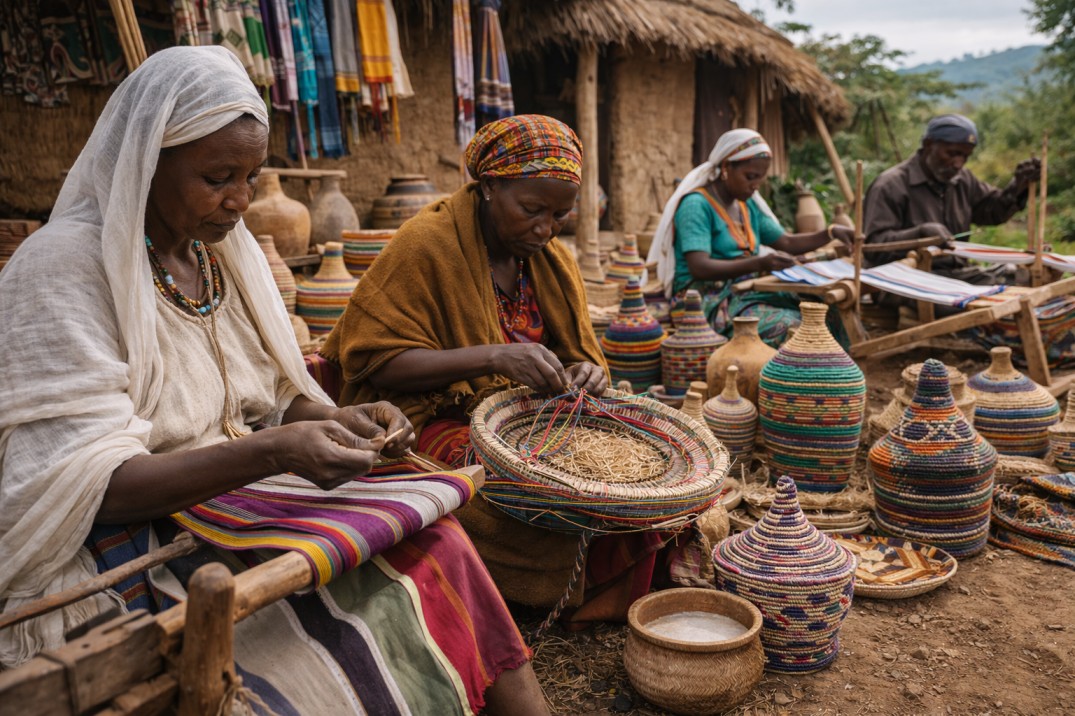
Ethiopia is renowned for its rich artistic heritage, and rural communities are the guardians of traditional weaving, basketry, and textile crafts. These crafts are more than decorative items—they carry cultural meanings, social identity, and generations of craftsmanship.
While many tourists focus on urban craft shops, visiting rural villages offers a deeper, authentic look at the artisans, their techniques, and the stories behind their work. This blog explores traditional Ethiopian crafts, regional variations, and why these practices are vital for culture and tourism.
Why Traditional Crafts Matter
Traditional crafts in Ethiopia are essential for:
• Cultural preservation: Patterns, materials, and methods reflect ethnic identity.
• Economic opportunity: Crafts provide income for artisans in rural areas.
• Tourist experiences: Visitors witness authentic craftsmanship and can purchase handmade items.
• Sustainable practices: Natural fibers and local materials minimize environmental impact.
Crafts are living traditions, not just souvenirs—they connect people to history, land, and community.
Weaving Traditions Across Ethiopia
Weaving is a core craft in many rural communities:
1. Cotton Weaving
• Cotton is hand-spun and dyed locally.
• Woven into clothing, scarves, shawls, and blankets.
• Each region has distinct patterns and colors, often indicating social or ethnic identity.
2. Silk and Wool Textiles
• Rural highland communities produce silk or wool fabrics.
• Techniques include hand-loom weaving and intricate embroidery.
• Used for traditional attire, religious garments, and ceremonial items.
3. Enset Fiber Weaving
• In southern Ethiopia, enset fibers are woven into mats, ropes, and baskets.
• Products are both functional and decorative.
• Weaving reflects local knowledge of natural fibers and sustainable craft.
Basketry and Its Cultural Significance
Basketry is practical and symbolic:
• Made from reeds, grass, palm leaves, or bamboo.
• Common items include storage baskets, hats, mats, and trays.
• Patterns often convey ethnic symbols, family identity, or social status.
In villages, basket-making is often a communal activity, with skills passed down through generations.
Regional Craft Variations
Northern Ethiopia (Amhara and Tigray)
• Woven textiles for ceremonial clothing and religious garments.
• Intricate patterns reflect local symbolism.
• Often combined with embroidery and decorative borders.
Southern Ethiopia (Gurage, Sidama, Hadiya)
• Enset fiber crafts, straw baskets, and mats.
• Woven items are daily-use products as well as gifts for ceremonies.
• Natural dyes create bright, earthy colors unique to each community.
Eastern Ethiopia (Harar, Somali regions)
• Handwoven baskets for storage and carrying goods.
• Some communities produce decorative woven wall hangings.
• Craft reflects blend of indigenous and Islamic design influences.
How Crafts Are Made
1. Material sourcing: Artisans gather fibers, grasses, or cotton from local farms.
2. Preparation: Fibers are cleaned, dried, spun, and dyed.
3. Weaving or basket-making: Techniques vary by region—looms, hand weaving, or coiling methods.
4. Decoration: Some items are painted, embroidered, or patterned.
5. Final product: Items are functional, decorative, and culturally meaningful.
Visitors can observe, learn, and even participate in these processes in many villages.
Visiting Artisan Villages
To experience Ethiopia’s rural crafts:
• Northern highlands: Visit textile villages near Gondar and Lalibela.
• Southern regions: Explore enset fiber weaving in Sidama and Gurage villages.
• Eastern Ethiopia: See basketry and textile crafts in Harar and Somali communities.
Guides often arrange interactive workshops, where tourists can try weaving or basket-making.
Supporting Artisans Responsibly
Travelers can help sustain rural crafts by:
• Purchasing directly from artisans: Avoid intermediaries or mass-produced copies.
• Learning about the craft: Understand the process, symbolism, and cultural significance.
• Sharing experiences: Promote awareness of Ethiopia’s crafts on social media or blogs.
• Respecting local customs: Some patterns or items may have ceremonial or symbolic meanings.
Responsible support ensures that skills and culture are preserved for future generations.
Opportunities for Craft Tourism and Investment
Investing in traditional crafts can create economic and cultural benefits:
• Workshops and training centers: Teach youth and preserve techniques.
• Cultural tourism packages: Combine weaving, basketry, and local homestays.
• Exports: Handcrafted items appeal to international buyers seeking authentic, eco-friendly products.
• Collaboration with designers: Modern designs combined with traditional techniques for wider markets.
These initiatives empower communities while showcasing Ethiopia’s rich craft heritage.
Challenges in Rural Craft Preservation
• Migration to cities: Young people may leave, reducing skill transmission.
• Market access: Remote villages may struggle to reach buyers.
• Modernization pressures: Mass-produced goods can overshadow handmade crafts.
• Resource availability: Some natural materials may be seasonal or limited.
Tourism, education, and sustainable investment are key to overcoming these challenges.
Ethiopia’s Traditional Crafts Are Living Heritage
Ethiopia’s rural weaving, basketry, and textile crafts are more than art—they are cultural expressions, practical tools, and symbols of identity. Visiting artisan villages provides travelers with authentic experiences, supports local communities, and helps preserve ancient skills.
Whether observing a handloom in the northern highlands, learning basketry in the south, or exploring dyed textiles in the east, every craft tells a story of Ethiopia’s land, people, and heritage.
Experiencing Ethiopia through its traditional crafts allows travelers to connect with the soul of the country, one woven thread or coiled basket at a time.